There’s one question that has helped me make every major decision of my adult life — and it cuts through fear instantly.
The bigger the implications of a decision, the harder it becomes to make it.
Every pros-and-cons list gave me conflicting answers. Then I asked myself: When I’m 70, which decision will I regret less?
The answer was immediate — and obvious.
That single question cut through everything. It’s called the regret minimisation framework, and it has changed how I approach difficult decisions.
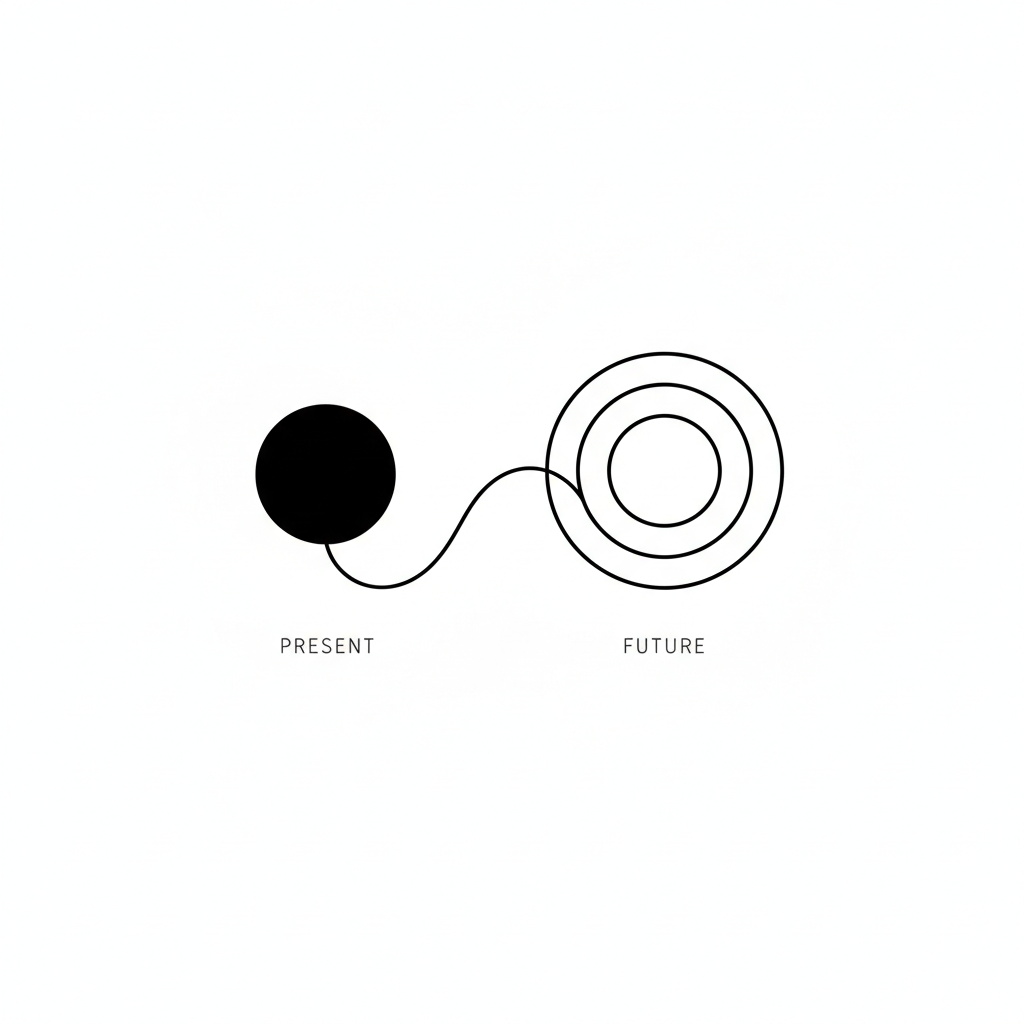
Why We Choose Wrong
Most decisions are made from today’s perspective.
We focus on what feels comfortable now. What feels safe. What other people might think. What could go wrong next month.
This short-term lens leads to predictable choices: we avoid difficult conversations, stay in situations that aren’t working, and let fear decide for us.
Then the years pass, and we wonder why we played it so safe.
The Framework
Jeff Bezos used this when deciding to start Amazon. He had a comfortable Wall Street job. Leaving to sell books online seemed crazy in 1994.
So he imagined himself at 80, looking back. He realized he wouldn’t regret trying and failing. But he’d definitely regret never trying.
That made the decision simple.
Here’s how it works:
Step 1: Project yourself to 70 or 80
Get far enough from today that short-term concerns fade.
Step 2: Look back at this decision
Imagine this choice is now part of your history.
Step 3: Ask which option you’d regret less
Not which worked out better. Which would you regret less?
What Changes from That Perspective
Short-term discomfort disappears
The awkward conversation? Your future self won’t remember it. The temporary pay cut? Barely a footnote.
What remains is whether you let short-term discomfort stop you from doing something meaningful.
Other people’s opinions fade
At 70, you won’t care what colleagues thought about your career change. You won’t remember who judged your choices.
You will care whether you lived according to your values or performed for others.
Inaction creates deeper regret
Research on end-of-life regrets is clear: people regret what they didn’t do far more than what they did.
They regret not starting the business, not travelling, not having the conversation, not taking the risk.
Failed attempts become stories. Avoided attempts become haunting questions.
Other people’s opinions fade
At 70, you won’t care what your colleagues thought about your career change. You won’t remember who judged your choices.
You’ll care whether you lived according to your values or performed for others.
Inaction creates deeper regret
Research on end-of-life regrets is consistent: people regret what they didn’t do far more than what they did.
They regret not starting the business. Not traveling. Not having the conversation. Not taking the risk.
Failed attempts become stories. Avoided attempts become haunting questions.
When to Use This
Use it for decisions that:
- Have long-term consequences
- Involve choosing between security and growth
- Require you to define what matters to you
- Still feel stuck despite analysing them thoroughly
Real Applications
Career crossroads
You’re 35 with a stable job. A former colleague wants you to join their startup. Risky, but exciting.
Your future self doesn’t care about the steady paycheck. They care whether you spent your prime working years playing it safe or pursuing something meaningful.
Relationship decisions
You know the relationship isn’t working, but leaving feels scary. Kids, finances, social ties make it complicated.
At 70, will you regret the temporary difficulty of a split, or two decades of quiet unhappiness?
Difficult conversations
You need to set boundaries with a parent, confront a partner, or address conflict with a business partner.
Your future self won’t remember the awkwardness. They’ll remember whether you spoke up or stayed silent for years.
Time with family
Your kids are young. Your parents are aging. Work is demanding. Something has to give.
When you’re old, you won’t wish you’d attended more meetings. You’ll wish you’d been present for the moments that mattered.
What It Reveals
This framework doesn’t tell you the “right” answer. It clarifies what you actually value.
Sometimes you’ll realise the safe choice aligns with your values. That’s fine. Your future self will respect that.
Other times you’ll see you’re choosing comfort over growth, approval over authenticity, fear over meaning.
That’s uncomfortable. But it’s clarifying.
The Practice
When you’re stuck on something important:
Close your eyes. Imagine you’re 70, looking back at today.
What does that version of you want you to know?
The answer usually comes quickly. And it’s usually different from what you’ve been telling yourself.
What I’ve Learned
I’ve used this for a decade. It’s helped me leave jobs, start projects, have hard conversations, and make changes I was afraid to make.
Not everything worked out perfectly. Some choices were harder than expected. Some failed.
But I don’t regret any of them.
What I’d regret is not trying. Playing small because I was afraid of discomfort or judgment or failure.
You’re in your 30s or 40s. You still have decades ahead. But you’re also old enough to see how quickly years pass. How easy it is to postpone. How much you’ve already compromised.
Your future self is already living with the consequences of today’s choices.
Try using the framework today on one decision you’ve been avoiding.
Leave a Reply